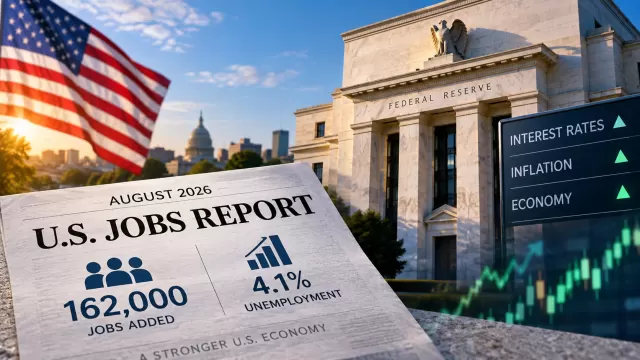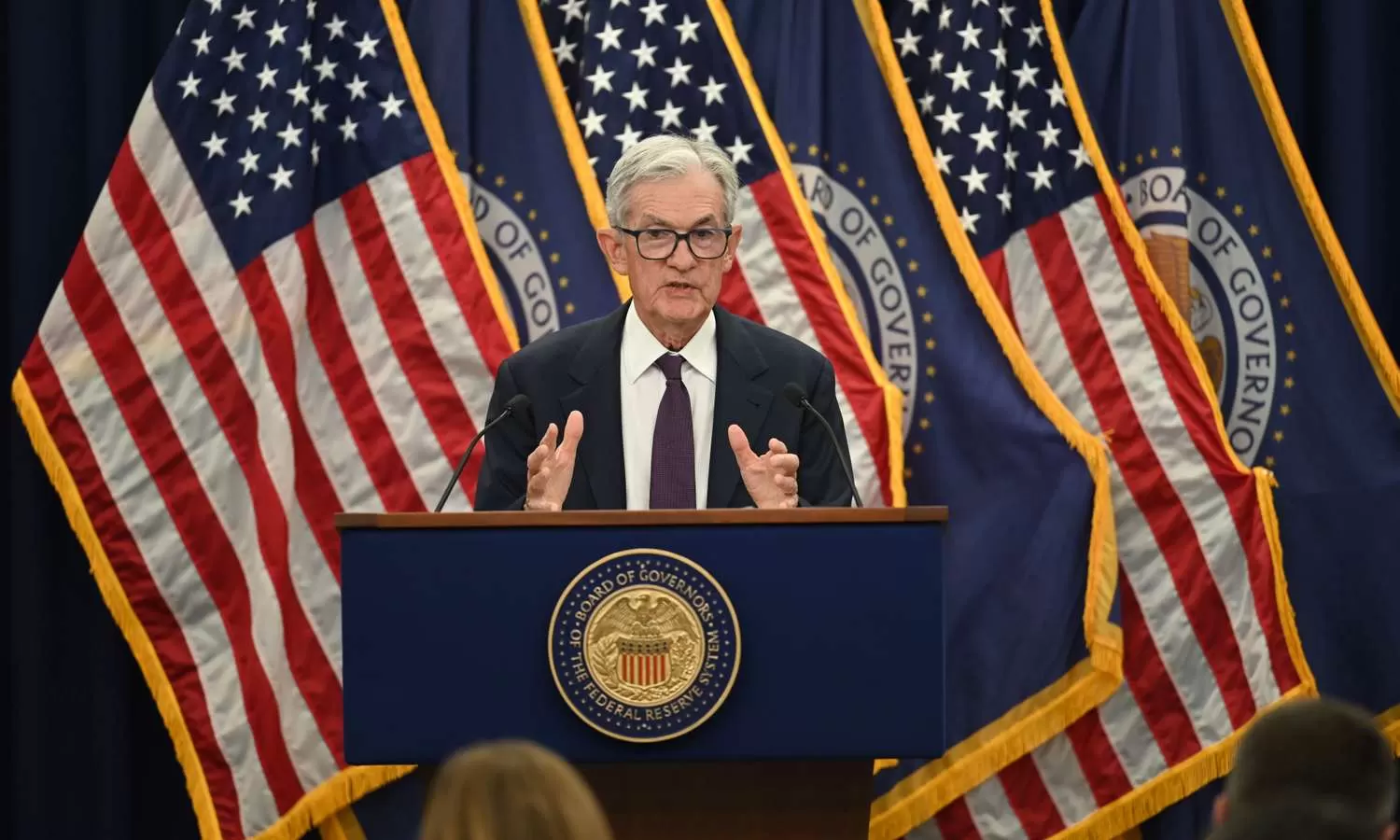
The Federal Reserve holds interest rates left its benchmark interest rate unchanged on Wednesday, October 28, 2026, choosing to maintain borrowing costs as policymakers assess persistent inflation and the strength of the U.S. economy.
The Federal Open Market Committee (FOMC) voted 10–2 to keep the federal funds rate within a target range of 3.75% to 4.00%, according to the central bank’s official announcement.
The decision comes at a crucial time for American households facing elevated borrowing costs, continued pressure from consumer prices and uncertainty about where interest rates may go next.
Although the Fed did not announce an increase or decrease, its statement makes clear that inflation remains an important concern.
Why Did the Federal Reserve Keep Interest Rates Unchanged?
The central bank’s latest decision reflects a balancing act between controlling inflation and maintaining a healthy economy.
Raising interest rates can help reduce inflation by making borrowing more expensive and discouraging some spending and investment. However, higher rates can also increase financial pressure on households and businesses.
Lowering interest rates can support economic activity, but cutting borrowing costs too quickly may create additional inflation risks.
In its October statement, the Fed described economic activity as expanding at a strong pace, supported by resilient domestic spending, productivity gains and business investment.
Officials also noted that job gains have kept pace with the workforce and that the unemployment rate has changed little.
Those conditions give policymakers room to evaluate additional economic data without immediately changing monetary policy.
Two Fed Officials Wanted Higher Interest Rates
The decision was not unanimous.
Fed Governor Lisa D. Cook and Cleveland Federal Reserve Bank President Beth M. Hammack voted against holding rates steady.
Both preferred increasing the benchmark range by 0.25 percentage points.
Their disagreement highlights the debate within the central bank about how aggressively it should respond to inflation.
Some policymakers believe higher borrowing costs may be necessary to bring inflation closer to the Fed’s long-term target of 2%.
Others favor gathering more information before making another adjustment.
The 10–2 result shows that holding rates steady received broad support at this meeting, even though opinions differed on the need for additional tightening.
What Does the Fed’s Decision Mean for Mortgage Rates?
For prospective homebuyers, Wednesday’s announcement does not automatically mean mortgage rates will remain unchanged.
Mortgage rates are influenced by several factors, including longer-term Treasury yields, investor expectations, inflation and conditions in the housing market.
The federal funds rate primarily influences short-term borrowing costs.
As a result, lenders may adjust their mortgage offers even when the Fed maintains its benchmark rate.
Homebuyers considering a mortgage should continue comparing offers from different lenders and evaluate the total cost of borrowing rather than relying exclusively on the latest Federal Reserve announcement.
Homeowners with adjustable-rate mortgages may experience different effects depending on their loan terms and reset dates.
Will Credit Card and Auto Loan Rates Change?
Credit card interest rates are often connected to benchmark rates such as the prime rate, which generally moves in response to Federal Reserve policy.
Because the Fed left its target unchanged, Wednesday’s decision does not itself create an immediate reduction in those borrowing costs.
However, lenders determine their own pricing, and individual borrowers may face different interest rates depending on credit history, account conditions and loan agreements.
Auto financing costs are also affected by broader market conditions, creditworthiness and lender competition.
Consumers carrying expensive debt should not assume that an unchanged federal funds rate will result in lower monthly payments.
For readers looking for ways to manage everyday expenses, BriefTop’s step-by-step budgeting guide explains how to organize spending and financial priorities.
What About Savings Accounts?
Savers may also be watching the Fed closely.
Banks and credit unions often adjust deposit rates in response to monetary policy and competition for customer deposits.
A decision to hold benchmark rates steady does not guarantee that savings account yields or certificate of deposit rates will stay at their current levels.
Financial institutions may still change their offers based on funding needs and expectations about future policy decisions.
Consumers comparing savings products should review interest rates, account requirements, fees and federal deposit-insurance coverage where applicable.
Could the Federal Reserve Raise Rates Again?
Wednesday’s announcement does not rule out a future increase or decrease.
The central bank emphasized that additional information will help determine the policy needed to return inflation to its 2% objective.
Upcoming inflation readings, employment reports, wage trends and business activity will provide important evidence for future decisions.
Financial markets will also examine comments from Fed officials for indications of how they interpret the economic outlook.
Still, no future rate change should be treated as certain.
Monetary policy decisions depend on incoming data and the economic conditions prevailing when officials meet.
Why This Decision Matters for the U.S. Economy
Federal Reserve policy affects far more than Wall Street.
Changes in borrowing costs can influence household budgets, business investments, housing activity, consumer demand and the availability of credit.
For small businesses, higher financing costs may make expansion more expensive.
For families, interest rates can influence whether purchasing a vehicle, refinancing debt or buying a home is financially practical.
Meanwhile, the Fed must consider how price increases affect household purchasing power.
The challenge is finding an appropriate balance between maintaining economic momentum and restoring price stability.
What Happens Next?
The Federal Reserve will continue evaluating whether inflation is moving sustainably toward its target while monitoring labor-market conditions and overall economic activity.
The Federal Reserve Holds Interest
For American consumers, the most important conclusion from Wednesday’s meeting is straightforward: the central bank has not changed its benchmark interest rate, and the future direction of policy remains dependent on economic data.
Whether borrowing costs rise, fall or remain stable in the coming months will depend on developments that are not yet fully known.
Sources and Further Reading