The New England Patriots saw their three-game winning streak come to an end Thursday night, falling 30-24 to the Chicago Bears in a competitive NFL Week 7 matchup at Soldier Field.
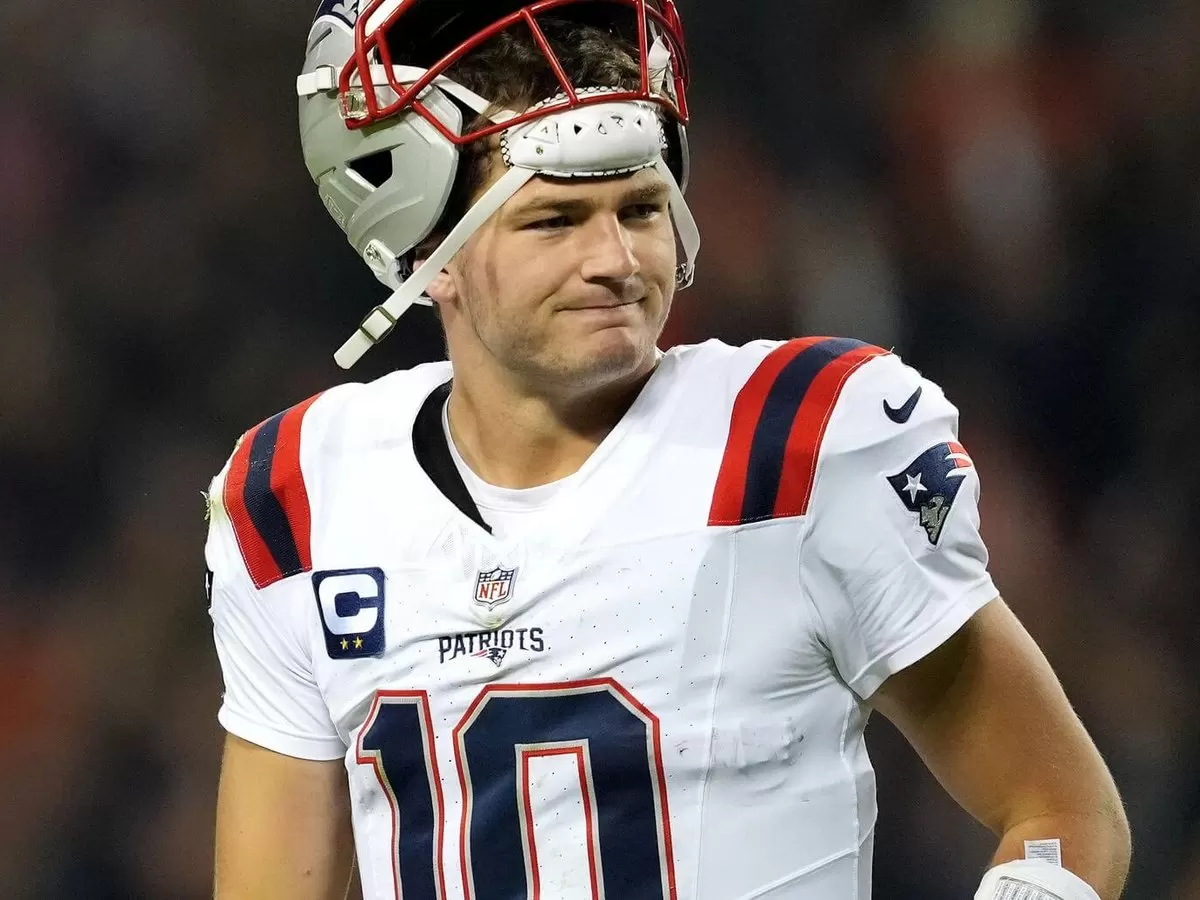
Despite an impressive individual performance from quarterback Drake Maye, New England could not overcome defensive breakdowns, a costly turnover and continued injury problems along its offensive line.
The loss dropped the Patriots to 4-3 on the season, while Chicago improved to 5-2 after another strong showing from quarterback Caleb Williams.
For Patriots head coach Mike Vrabel, the defeat offered a frustrating combination of encouraging individual performances and recurring mistakes that ultimately prevented his team from extending its winning streak.
While the final score reflected another setback, New England’s ability to remain competitive against a dangerous Chicago offense provided reasons for optimism.
Drake Maye Delivers Impressive Numbers Despite Patriots Defeat
Maye was one of the brightest performers on the field, completing 24 of 31 passes for 321 yards, two passing touchdowns and one interception.
The young quarterback also added a rushing touchdown, accounting for three of New England’s scores.
His accuracy and ability to extend plays helped keep the Patriots within striking distance throughout the contest.
Operating behind an offensive line that had undergone significant changes because of injuries, Maye demonstrated an ability to respond to pressure and find opportunities downfield.
However, one mistake proved especially damaging.
During the second quarter, Maye threw an interception in the end zone while attempting to connect with tight end Eli Raridon.
Instead of potentially adding points, New England surrendered possession, allowing Chicago to capitalize on the momentum shift.
The Bears subsequently extended their lead to 20-7.
Maye acknowledged after the game that New England had produced several positive moments but failed to execute consistently enough to secure the victory.
His performance nevertheless reinforced his importance to the Patriots’ offense and highlighted the potential of the team’s passing attack.
Injuries Force Patriots to Reshape Offensive Line
One of New England’s biggest challenges entering the game involved its offensive line.
The Patriots were without two starting guards after Alijah Vera-Tucker and Mike Onwenu were placed on injured reserve.
Vera-Tucker was dealing with a hamstring injury, while Onwenu was sidelined by an ankle problem.
Those absences forced New England to adjust its blocking combinations, with Matt Pryor and Walter Rouse helping fill the vacancies.
The Thursday night matchup featured the Patriots’ 10th different offensive line combination of the season.
Despite the constant changes, Maye was sacked only twice, an encouraging result considering the circumstances.
The protection was not flawless, but the unit helped create enough opportunities for New England to remain competitive.
The bigger concern involves whether the Patriots can maintain that level of protection while dealing with injuries and frequent personnel changes.
Continuity is particularly important for an offense built around a developing quarterback, and New England will need its available linemen to establish greater consistency during the coming weeks.
Rhamondre Stevenson Provides a Major Offensive Spark
Running back Rhamondre Stevenson produced one of the most memorable plays of the evening.
Near the end of the first half, Stevenson caught a short pass from Maye and turned it into a 48-yard touchdown.
The explosive play cut Chicago’s advantage to 20-14 and gave New England renewed confidence heading into halftime.
Stevenson finished with five receptions for 93 receiving yards, providing a valuable alternative when the Patriots needed to move the football quickly.
His ability to create yards after the catch illustrated how important running backs can be in modern passing offenses.
However, Stevenson’s receiving success contrasted with New England’s struggles on the ground.
The Patriots managed only 70 rushing yards after entering the contest averaging 130.7 per game.
That decline made it more difficult for the offense to maintain balance, particularly when Chicago established a lead.
As New England became increasingly dependent on passing situations, the Bears were able to devote greater attention to defending Maye’s receiving options.
Restoring a reliable rushing attack will be an important priority.
Caleb Williams and Bears Offense Expose Defensive Weaknesses
Chicago quarterback Caleb Williams delivered an impressive performance of his own.
Williams completed 22 of 33 passes for 308 yards and two touchdowns, helping the Bears maintain their advantage despite multiple comeback attempts.
Wide receiver Luther Burden III emerged as a major offensive weapon, recording four receptions for 130 yards and a touchdown.
Chicago repeatedly found opportunities to gain significant yardage after the catch, exposing problems in New England’s defensive execution.
According to the Patriots’ official postgame analysis, New England’s defense missed 16 tackles and allowed 149 yards after the catch.
Those numbers help explain why Chicago was able to sustain productive drives and control much of the game’s tempo.
The Bears also outsnapped the Patriots 66-50, placing additional physical demands on an already challenged New England defense.
For Vrabel, improving tackling and forcing more turnovers will be essential if the Patriots hope to compete consistently against strong opponents.
Costly Mistakes Make the Difference
Although New England remained competitive, several mistakes prevented the team from completing a comeback.
The second-quarter interception was particularly significant because it eliminated a scoring opportunity and allowed Chicago to build its lead.
Defensive penalties also contributed to the problems.
Rookie edge rusher Gabe Jacas was penalized for roughing Williams during the second quarter, giving Chicago an additional 15 yards on a drive that eventually ended with a touchdown pass to Burden.
The Patriots also struggled to stop the Bears at crucial moments, allowing Chicago to maintain its advantage.
Late in the fourth quarter, Bears kicker Cairo Santos connected on a 58-yard field goal that extended Chicago’s lead to 30-21.
New England responded with a field goal from Andy Borregales, cutting the deficit to six points.
However, Chicago recovered the ensuing onside kick, ending the Patriots’ final opportunity.
The result demonstrated how a handful of critical plays can outweigh otherwise productive offensive statistics.
Patriots vs. Bears: Key Game Statistics
| Statistic | Patriots | Bears |
|---|---|---|
| Final Score | 24 | 30 |
| Quarterback Passing Yards | 321 | 308 |
| Quarterback Passing TDs | 2 | 2 |
| Quarterback Interceptions | 1 | 0 |
| Season Record After Game | 4-3 | 5-2 |
Notable Player Performances
Drake Maye — New England Patriots
- 321 passing yards
- 24 completions on 31 attempts
- Two passing touchdowns
- One rushing touchdown
- One interception
Caleb Williams — Chicago Bears
- 308 passing yards
- 22 completions on 33 attempts
- Two passing touchdowns
Rhamondre Stevenson — New England Patriots
- Five receptions
- 93 receiving yards
- One receiving touchdown
Luther Burden III — Chicago Bears
- Four receptions
- 130 receiving yards
- One receiving touchdown
What the Loss Means for New England’s Season
The defeat ended a promising three-game winning streak that had helped the Patriots recover from an uneven start to the 2026 NFL season.
New England entered Thursday’s contest having improved its offensive production and demonstrated a growing ability to compete against divisional opponents.
Although the loss interrupted that momentum, the team’s overall performance suggested that its recent improvement was not entirely erased.
Maye continued generating explosive passing plays, Stevenson remained a productive receiving option, and the offensive line delivered a respectable performance despite significant injuries.
Nevertheless, the Patriots must address problems that could become increasingly costly as the season progresses.
Turnovers remain a concern, with New England carrying a minus-seven turnover differential through seven games.
The defensive unit must also improve its tackling, coverage communication and ability to limit explosive plays.
Those issues become especially important when facing opponents capable of scoring quickly.
If New England can reduce mistakes while maintaining its offensive development, it could remain competitive in the AFC playoff race.
But continued inconsistency may make it difficult to convert close games into victories.
What’s Next for the New England Patriots?
The Patriots will have additional preparation time following their Thursday night matchup.
Their next scheduled game is against the Miami Dolphins on November 1, providing an opportunity to regroup and evaluate injured players.
The extended break should allow coaches to assess the offensive line, review defensive mistakes and make adjustments before another important AFC East matchup.
For Maye, the emphasis will likely remain on making smart decisions in critical scoring situations while continuing to develop his connection with New England’s receivers.
For Vrabel, the challenge involves maintaining the competitive mentality that helped the Patriots win three consecutive games without allowing the latest defeat to undermine their confidence.
Chicago, meanwhile, can view the victory as another encouraging step in a season that has featured growing confidence in Williams and the Bears’ offensive system.
A Setback, but Not the End of the Patriots’ Momentum
New England’s 30-24 defeat against Chicago was disappointing, particularly because the Patriots had opportunities to change the outcome.
Still, the performance offered a clearer picture of both the team’s strengths and the weaknesses that remain unresolved.
Maye showed that he can deliver productive performances under pressure, even when the protection around him is frequently changing.
Stevenson provided another example of the offense’s versatility, while the Patriots continued competing despite falling behind.
The next stage of New England’s season will depend on whether those positive developments can be matched by improvements in ball security, defensive discipline and execution.
The Patriots may have lost their winning streak in Chicago, but their response over the coming weeks will determine whether this defeat becomes a temporary setback or the beginning of a more concerning trend.
Sources and Further Reading
- Associated Press via Yahoo Sports — Patriots Holding Onto Positives After Three-Game Win Streak Is Snapped by Bears
- New England Patriots — Official Game Analysis and Eight Takeaways
- NFL.com — Patriots vs. Bears: What We Learned From Chicago’s 30-24 Victory
BriefTop Sports | NFL News and Analysis