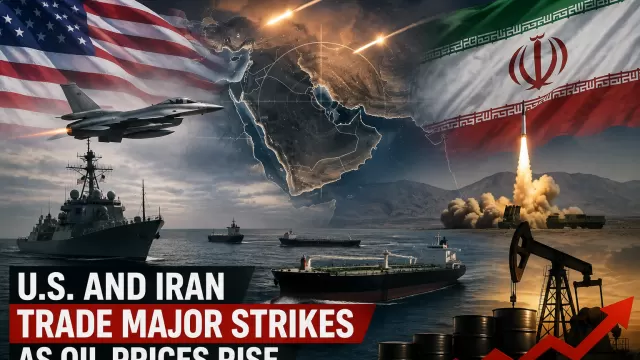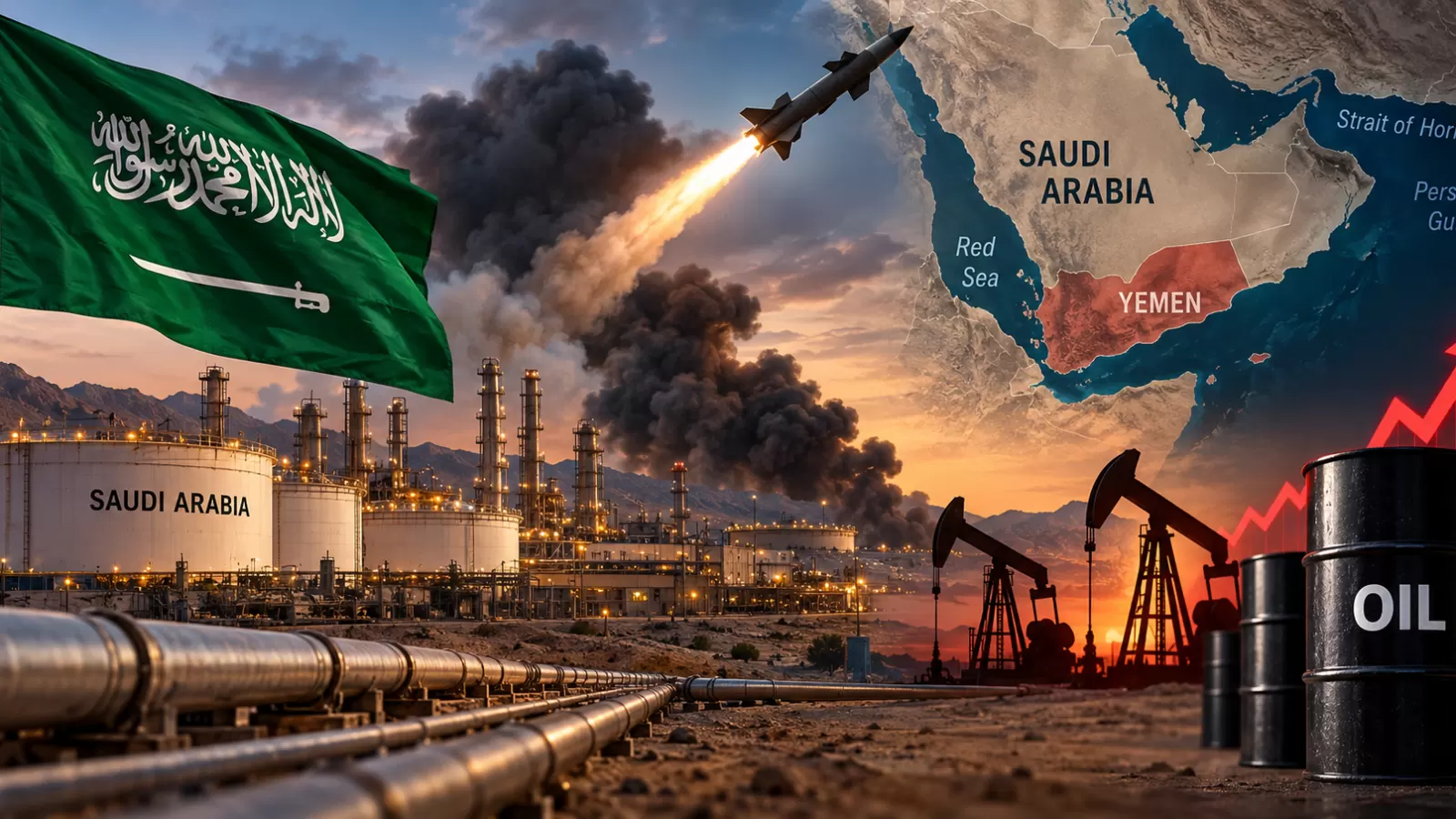
Houthi attacks on Saudi Arabia have intensified concerns over the security of global oil supplies as renewed fighting in Yemen collides with disruptions to some of the Middle East’s most important energy routes.
Yemen’s Iran-aligned Houthi movement said it launched dozens of missiles and drones toward a military airbase in Khamis Mushait in southern Saudi Arabia on Monday.
Saudi authorities issued emergency alerts across several southern cities, while the Saudi-led coalition said 13 civilians were wounded in the attacks.
The escalation comes at a particularly sensitive moment for global energy markets.
Saudi Arabia’s strategically important East-West oil pipeline remains offline following a separate aerial attack last week, increasing concerns about how the world’s largest crude exporter can move oil while shipping through the Strait of Hormuz remains heavily disrupted.
According to Reuters, traders warn that a prolonged shutdown of the pipeline could potentially remove as much as 4% of global oil supply from the market under current conditions.
Why Saudi Arabia’s East-West Pipeline Matters
The East-West pipeline stretches approximately 1,200 kilometers, or 745 miles, across Saudi Arabia.
Its strategic importance goes well beyond its size.
Saudi Arabia constructed the pipeline during the 1980s partly to provide an alternative route for crude oil when transportation through the Strait of Hormuz was threatened during the Iran-Iraq war.
Instead of sending oil through the Persian Gulf and Hormuz, crude can travel west across Saudi territory before reaching facilities on the Red Sea.
That alternative has become particularly important during the current disruption.
Saudi Aramco highlighted the East-West pipeline earlier this year as part of the infrastructure it was using to maintain production and exports amid disruption through Hormuz.
Now that alternative route has itself been disrupted.
The Associated Press reports that Saudi Arabia closed the pipeline after an attack that Riyadh blamed on drones launched by Iranian-backed militias in Iraq. Two regional officials told AP that repairs could take approximately three to five weeks.
Houthi Advance Adds Pressure in the Red Sea
The pipeline isn’t the only concern.
Houthi forces have made significant advances along Yemen’s western coastline and recently took control of Perim Island.
The island sits in the Bab el-Mandeb Strait at the southern entrance to the Red Sea.
That location matters because Bab el-Mandeb is an important passage connecting the Red Sea with the Gulf of Aden and ultimately the Indian Ocean.
Commercial ships carrying energy products and other goods regularly depend on the route.
The combination of instability around the Red Sea and disruption around the Strait of Hormuz means pressure is building around two strategically important maritime corridors at the same time.
Reuters reported Tuesday that the Houthis maintained effective control over nearly all of Yemen’s western coastline despite intensified Saudi and Yemeni airstrikes.
Strait of Hormuz Talks Are Also Stalled
Diplomatic efforts have encountered another obstacle.
Oman had been expected to host discussions involving Iran and Gulf Arab states aimed at negotiations over reopening the Strait of Hormuz.
Those talks were postponed.
Iran said the postponement came at Saudi Arabia’s request, according to Reuters.
Before the current conflict, roughly 20% of global oil exports passed through the Strait of Hormuz, making developments surrounding the narrow waterway particularly important for international energy markets.
With the East-West pipeline disrupted, Saudi Arabia has fewer options for bypassing problems in the Gulf.
That is one reason markets are paying close attention to how long repairs take.
Oil Prices React to Growing Supply Risks
Energy markets have already responded.
Oil prices climbed Tuesday as traders evaluated the pipeline shutdown, renewed attacks and uncertainty surrounding regional shipping.
Reuters reported Brent crude at approximately $107 per barrel during early Tuesday trading, while U.S. West Texas Intermediate was above $102 per barrel.
Those prices can change quickly, but the market reaction illustrates why events in Saudi Arabia and Yemen matter far beyond the Middle East.
A sustained reduction in oil supply can eventually affect transportation, manufacturing and consumer energy costs in countries thousands of miles away.
However, the ultimate impact will depend heavily on how long the disruption lasts and whether alternative supply routes remain available.
The Conflict in Yemen Is Escalating Again
The latest developments also represent a significant deterioration in Yemen’s long-running conflict.
Saudi Arabia has led a coalition fighting the Houthis since 2015, although fighting had become considerably quieter during a ceasefire period in recent years.
That relative calm has now deteriorated.
The renewed fighting has allowed Houthi forces to gain territory while Saudi and Yemeni aircraft have increased strikes against Houthi positions.
The consequences extend beyond energy markets.
Reuters reported Tuesday that more than 100,000 people have been internally displaced by the renewed fighting, citing the United Nations refugee agency. Thousands more have reportedly crossed by sea toward Djibouti.
That humanitarian dimension remains an important part of the developing story even as international attention focuses heavily on oil and shipping.
What Happens Next?
Several developments will determine whether the situation becomes more disruptive.
One is how quickly Saudi Arabia can restore the East-West pipeline.
Another is whether diplomatic efforts surrounding the Strait of Hormuz resume.
The trajectory of the renewed conflict in Yemen will also be critical, particularly around areas controlling access to Red Sea shipping.
For global markets, the biggest concern isn’t simply one attack.
It is the possibility that several disruptions could overlap: an important Saudi pipeline offline, restricted shipping through Hormuz and increasing instability near the entrance to the Red Sea.
That combination explains why the latest Houthi attacks on Saudi Arabia are receiving attention well beyond the immediate conflict.
For now, the situation remains fluid, and the duration of the pipeline outage could become one of the most important factors determining how severely the renewed regional instability affects global energy supplies.