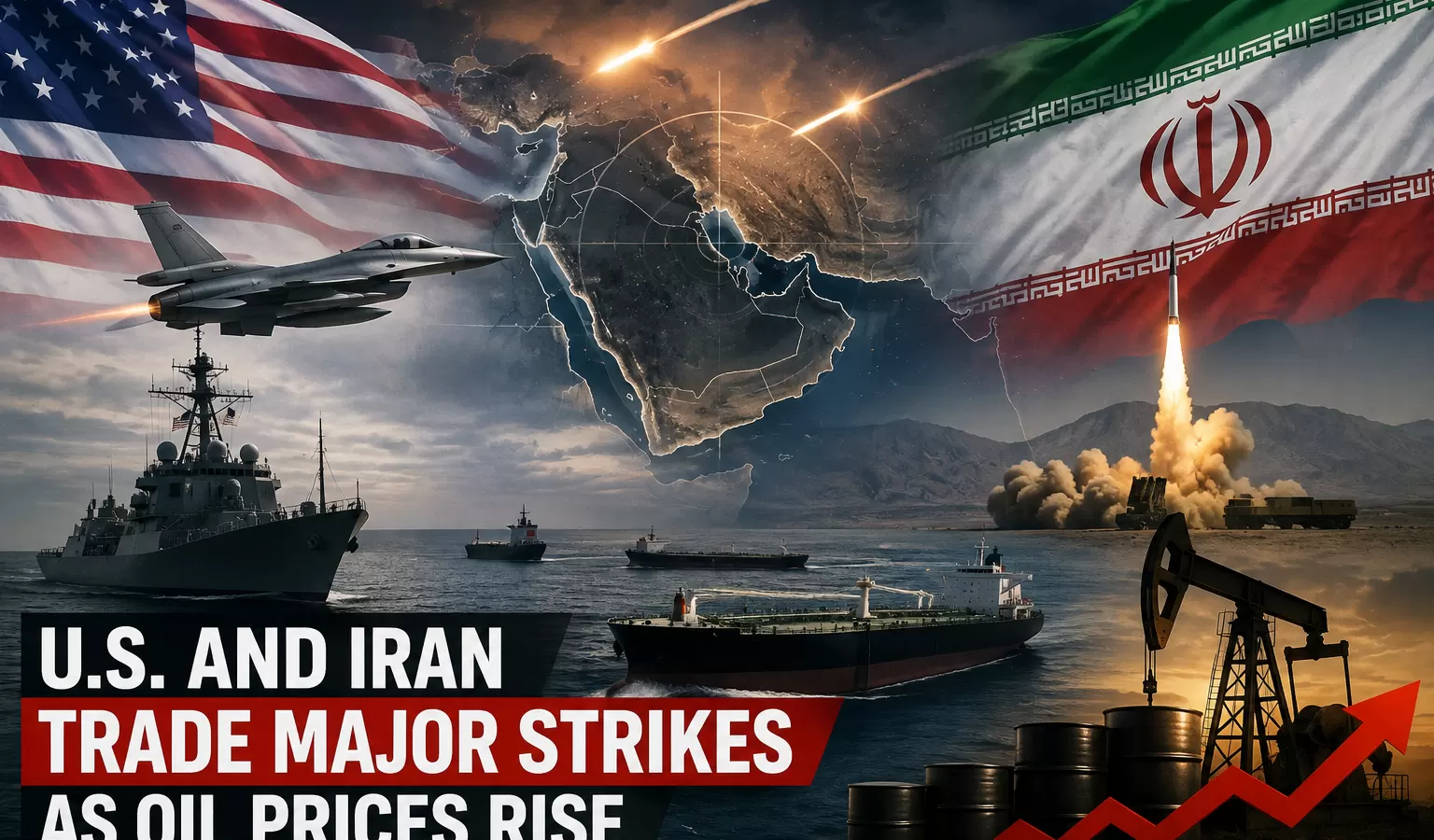
The United States and Iran have exchanged a major new round of military attacks, intensifying a prolonged conflict and raising fresh concerns about regional security and global energy supplies.
U.S. forces struck targets along Iran’s southern coast, while Tehran responded with attacks directed at U.S. military positions and American allies across the region. Reuters described the exchange as the largest between the two sides since July.
The escalation comes after a period of reduced military activity that had raised hopes that the conflict could move toward a less volatile phase.
Those hopes are now under renewed pressure.
Iran Responds Across the Gulf
Iranian attacks were directed toward locations associated with the United States and its regional allies.
AP reported Wednesday that Kuwait and Bahrain said they had come under attack, while Iranian forces also targeted locations connected to U.S. forces in Jordan. No casualties were initially reported from the attacks on Kuwait and Bahrain.
The latest fighting followed U.S. strikes against Iranian military targets.
U.S. Central Command said the American operation included strikes against air-defense sites, radar systems and maritime assets, according to AP.
Strait of Hormuz Becomes a Major Concern
Beyond the immediate military confrontation, attention is increasingly focused on the Strait of Hormuz, one of the world’s most strategically important energy shipping routes.
Shipping activity through the strait has fallen below recent averages during the renewed escalation.
Preliminary Kpler data cited by Reuters showed only four commodity vessels transited the waterway Tuesday, compared with a 10-day average of about 13.
Disruptions in the area matter far beyond the Middle East because a significant portion of global oil supplies normally travels through the Strait of Hormuz.
Oil Prices React to Renewed Fighting
Energy markets have already responded.
Brent crude settled Wednesday at $95.63 per barrel, while U.S. West Texas Intermediate crude settled at $91.01, according to Reuters. Both gained about 1% during the session.
That followed a considerably larger jump Tuesday, when Brent gained 4.6% and WTI rose 5.2% amid fears that the renewed fighting could disrupt Middle Eastern energy supplies.
Persistent increases in energy prices could eventually affect transportation, businesses and consumers well beyond the region.
Could the Conflict Escalate Further?
That remains the central question.
The latest exchange demonstrates that both countries retain the ability to rapidly intensify military operations after periods of relative calm.
It also increases pressure on neighboring Gulf countries, some of which host American forces while simultaneously seeking to avoid becoming direct participants in a wider confrontation.
For global markets, developments surrounding the Strait of Hormuz will be particularly important. A prolonged reduction in shipping traffic or further attacks near energy infrastructure could put additional pressure on oil prices.
For now, the renewed attacks have brought uncertainty back to a conflict that had appeared to be entering a quieter period.