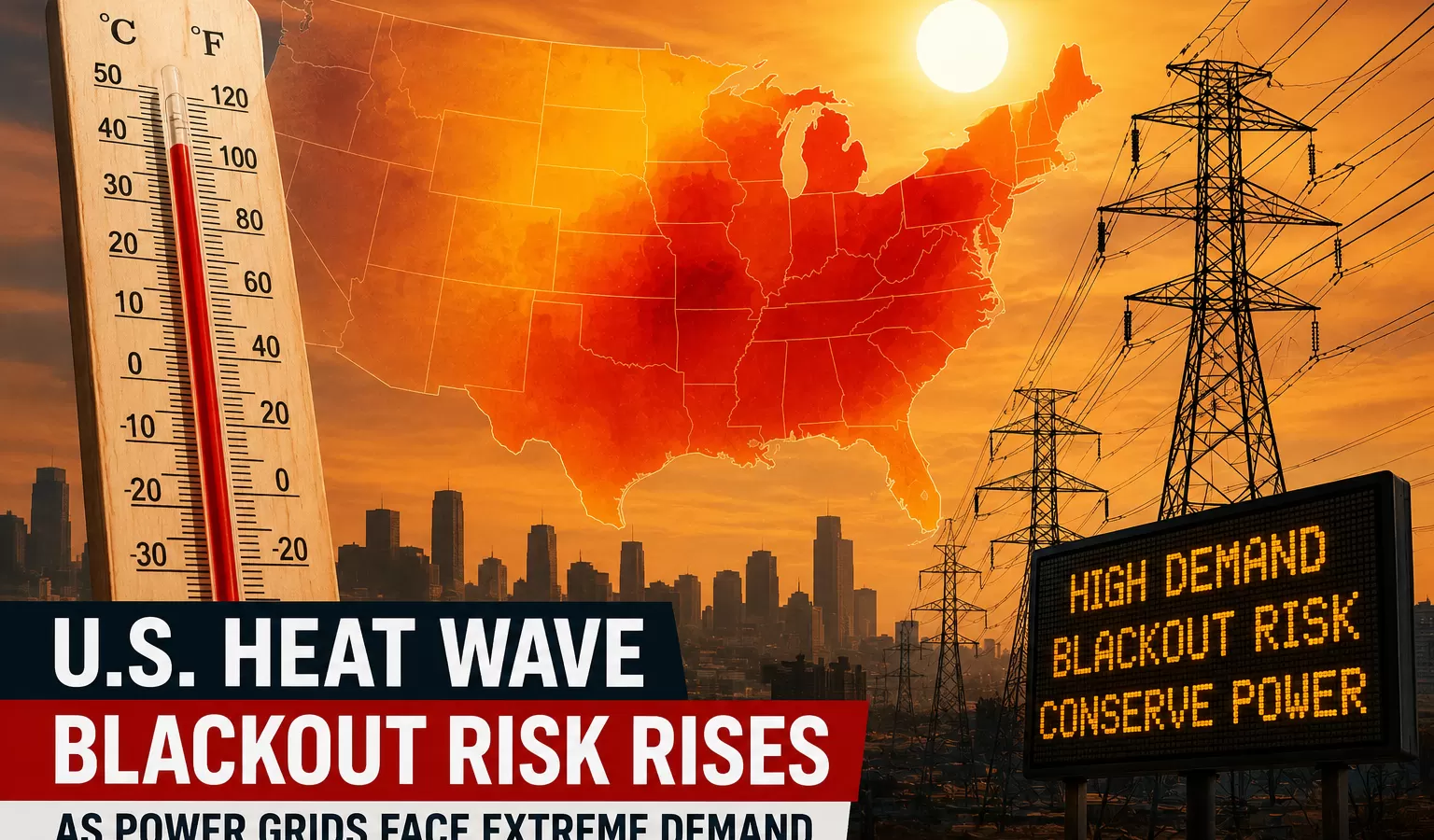
A severe U.S. heat wave is increasing blackout risk as soaring temperatures push electricity demand higher across some of the country’s largest power grids.
Millions of Americans from the Midwest to the Mid-Atlantic are facing extreme heat at the same time that grid operators are working to ensure enough electricity remains available to meet surging demand.
The situation has prompted emergency measures designed to prevent rotating blackouts as air conditioners and other cooling systems place additional pressure on the power supply.
U.S. Heat Wave Blackout Risk Increases
One of the biggest concerns involves PJM Interconnection, which operates the largest electric grid in the United States.
PJM’s territory stretches from the Chicago area through parts of the Mid-Atlantic and serves approximately 67 million people.
According to Reuters, the U.S. Department of Energy warned of heightened blackout risks within the PJM system as extreme temperatures pushed electricity consumption upward.
PJM issued a maximum generation emergency alert, an action intended to make additional electricity generation available when the grid is under significant pressure.
Energy Department Authorizes Backup Power
Energy Secretary Chris Wright authorized PJM to use backup generation resources if necessary to maintain reliability and help prevent rotating outages.
Power generators with facilities already offline for planned maintenance were also asked to determine how quickly those units could potentially return to service.
These measures do not mean widespread blackouts are certain.
Instead, they show how seriously grid operators are treating the combination of extreme temperatures and unusually high electricity demand.
Electricity Demand Nears Extreme Levels
Pressure isn’t limited to the PJM region.
The Midcontinent Independent System Operator, commonly known as MISO, manages electricity across a large portion of the central United States.
MISO projected demand could reach approximately 121 gigawatts, approaching its historical peak of 127.1 GW.
The operator increased reserve requirements so additional electricity would be available if power plants or other parts of the system experienced unexpected problems.
Consumers Asked to Reduce Electricity Use
Some electricity providers are encouraging customers to conserve power during periods of peak demand.
In Missouri, for example, the Howell-Oregon Electric Cooperative asked customers to take steps such as unplugging appliances that were not being used and adjusting thermostats.
Small reductions across thousands of homes and businesses can help decrease pressure on the grid when electricity consumption reaches its highest levels.
Why Extreme Heat Can Threaten the Power Grid
Heat waves create a difficult combination for electricity systems.
Demand increases dramatically as millions of homes and businesses use air conditioning. At the same time, power plants, transmission infrastructure and other electrical equipment must continue operating under extreme environmental conditions.
If available electricity falls below demand, grid operators may have to take emergency measures to prevent a larger system failure.
Rotating outages can be used as a last resort, temporarily cutting electricity to selected areas to stabilize the broader grid.
What Americans Should Watch Next
Whether blackouts actually occur will depend on temperatures, electricity consumption and the availability of generating capacity.
For residents in affected regions, conservation requests from local utilities will be particularly important during the hottest hours of the day.
The current emergency also highlights a broader challenge for the U.S. electricity system: maintaining reliable power as extreme weather pushes demand toward record levels.
For now, grid operators are relying on additional reserves and emergency resources to keep electricity flowing to millions of Americans.
Sources
Reuters — Blackout risk rises as heat wave stresses U.S. electric grids