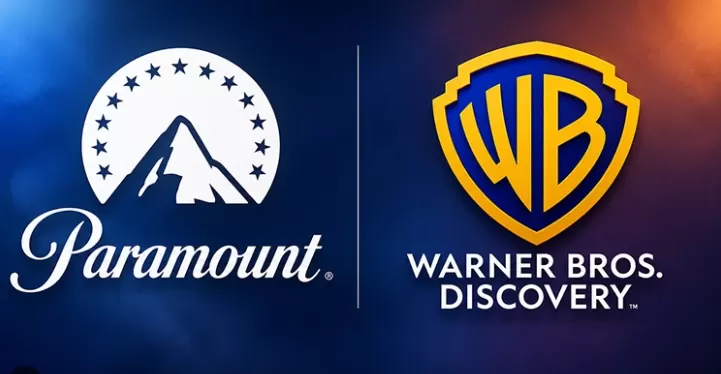
One of Hollywood’s biggest proposed media combinations has moved significantly closer to completion.
Paramount Skydance reached a settlement with California and 11 other U.S. states that had challenged its planned acquisition of Warner Bros. Discovery, removing a major legal obstacle while adding a series of enforceable commitments covering film production, workers, cable negotiations and streaming.
The settlement was announced on September 21, 2026, by California Attorney General Rob Bonta, who led the coalition of 12 attorneys general.
If completed, the transaction would bring an extraordinary collection of entertainment and media properties under the same corporate umbrella.
That includes major film studios, television networks and streaming businesses associated with Paramount and Warner Bros. Discovery.
But the settlement doesn’t mean regulators suddenly stopped having concerns.
Instead, Paramount has agreed to conditions designed to address some of the competition, employment and consumer issues raised by the states.
Here’s what happened, what Paramount agreed to do and why this deal could significantly reshape Hollywood.
Paramount Reaches Settlement With 12 States
California Attorney General Rob Bonta announced that the states had secured a settlement resolving their lawsuit challenging the Paramount-Warner Bros. Discovery combination.
According to the California Department of Justice, the states had alleged that the merger could harm competition by reducing entertainment output and increasing prices, potentially affecting both consumers and industry workers.
Rather than continuing the legal battle, the parties reached a settlement containing commitments that can be enforced by a court.
The agreement is still pending court approval.
That’s an important distinction.
The legal settlement clears a major obstacle, but the process isn’t simply a case of the companies being allowed to operate without conditions.
Paramount Commits Another $1.5 Billion to U.S. Production
One of the biggest components of the settlement concerns domestic film production.
Paramount agreed to a minimum additional investment of $1.5 billion in U.S. film production over five years, according to the California attorney general’s office.
That averages at least $300 million in additional domestic production investment per year over the period.
Why include a requirement like this?
One of the major concerns surrounding media consolidation is that combining large entertainment companies could eventually result in fewer productions.
Fewer productions can affect more than actors and directors.
Film and television projects employ enormous networks of workers, including:
Writers.
Editors.
Camera crews.
Set designers.
Visual-effects teams.
Costume departments.
Production assistants.
Drivers.
Caterers.
Construction workers.
And many other specialized roles.
Requiring additional domestic production is therefore intended partly to offset concerns about reduced output following the merger.
Paramount Must Meet Movie Release Targets
The agreement goes further than simply requiring investment.
Paramount also committed to minimum theatrical film output.
According to Reuters, Paramount is expected to produce 30 films in each of the first two years of the agreement and 32 films in each of the following three years.
The requirements also address the types of movies being produced.
At least four films annually must be independent productions, while at least 20% must qualify as blockbusters under the agreement.
Failure to meet the required movie output could become expensive.
Reuters reported that Paramount could face a $30 million penalty for each film by which it falls short of its commitment.
That turns what might otherwise have been a public promise into something with meaningful financial consequences.
$47.5 Million Fund for Workers
Hollywood workers are another major part of the settlement.
The California Department of Justice says Paramount agreed to establish a $47.5 million fund for workers affected by the merger.
Media mergers frequently generate concerns about layoffs because combining two companies can create overlapping positions.
Two businesses may have separate marketing teams.
Separate technology departments.
Separate distribution operations.
Separate administrative structures.
After a merger, companies frequently look for opportunities to consolidate those operations.
That can generate savings for the corporation while creating uncertainty for employees.
The worker fund doesn’t eliminate those concerns, but it represents one of the specific concessions included in the settlement.
CNN and CBS Could End Up Under the Same Corporate Umbrella
The transaction isn’t only about movies.
It also has major implications for television news.
The combined company would bring CNN and CBS under common ownership.
That created additional concerns about editorial independence and media concentration.
As part of the settlement, Paramount agreed to establish independent editorial boards for CNN and CBS, Reuters reported.
Those protections are intended to provide additional oversight surrounding journalistic independence.
However, the proposal has also generated debate about whether an oversight structure will be enough to address broader concerns surrounding ownership concentration.
The existence of the boards therefore doesn’t mean the controversy surrounding the news operations has disappeared.
What Happens to HBO Max and Paramount+?
Streaming is another reason this merger matters.
Warner Bros. Discovery operates HBO Max, while Paramount operates Paramount+ and the free streaming service Pluto TV.
The settlement includes a commitment related specifically to free streaming.
According to the state agreement, the merged company must continue offering a free streaming service such as Pluto TV and maintain its existing service and quality.
This is notable because streaming consolidation has become one of the defining themes of the entertainment industry.
Consumers have watched the market evolve from a small number of services into a crowded collection of subscriptions.
Now consolidation is moving in the opposite direction.
The question becomes:
How many major streaming companies will ultimately remain?
Cable Negotiations Are Also Restricted
The settlement contains another provision that could matter to consumers.
For five years, the merged company must negotiate agreements for Paramount basic cable channels separately from negotiations involving Warner Bros. Discovery basic cable channels.
Why?
Combining the channel portfolios could potentially give the merged company greater bargaining power when negotiating with television distributors.
The states argued that maintaining separation in these negotiations could help preserve competition and limit the company’s ability to increase affiliate prices.
The agreement also includes restrictions intended to effectively cap certain affiliate arrangements.
Those details may sound technical, but cable negotiation costs can ultimately affect what consumers pay.
Why Did the States Challenge the Merger?
The coalition originally sued because it believed the transaction could harm competition.
Combining two major entertainment businesses means fewer large companies competing for:
Movie audiences.
Television viewers.
Streaming subscribers.
Advertising.
Creative talent.
Sports rights.
Distribution.
And production workers.
The states argued that reduced competition could potentially result in lower output and higher prices.
Paramount disagreed with the effort to block the transaction.
The settlement represents a compromise.
The merger can move forward if the agreement receives court approval, while Paramount becomes subject to a set of enforceable obligations.
The Settlement Is Not an Endorsement of the Merger
This point is important.
California Attorney General Rob Bonta explicitly said the settlement shouldn’t be interpreted as his endorsement of the transaction.
His office framed the agreement as a way to obtain enforceable protections after challenging the combination on antitrust grounds.
That means there are really two separate questions:
Can the transaction move forward?
And:
Do all regulators, workers and industry observers believe the merger is good for Hollywood?
The first question is moving much closer to yes.
The second remains heavily debated.
Hollywood Unions Have Had Different Reactions
The deal has also generated different responses across Hollywood labor organizations.
The Writers Guild of America had challenged the transaction, while other major entertainment unions have focused heavily on obtaining enforceable protections for workers and production.
That disagreement reflects a broader debate surrounding media consolidation.
Supporters of settlements can argue that enforceable production and employment commitments provide tangible protections.
Critics can argue that allowing two enormous media businesses to combine creates long-term competitive problems that temporary commitments cannot fully solve.
Those concerns aren’t necessarily resolved simply because the legal cases are being settled.
What Would Paramount Gain?
Warner Bros. Discovery owns some of the entertainment industry’s most recognizable assets.
The combined business would have interests spanning:
Warner Bros. Pictures.
Paramount Pictures.
HBO.
HBO Max.
CNN.
CBS.
Paramount+.
Pluto TV.
Discovery networks.
And enormous libraries of movies and television programming.
It would also control or participate in globally recognizable entertainment franchises.
That scale could provide substantial advantages when negotiating distribution agreements, selling advertising and competing for streaming subscribers.
But enormous scale also creates integration challenges.
Combining companies this large isn’t simply a matter of placing two logos next to each other.
What Could Change for Viewers?
Consumers probably shouldn’t expect everything to change immediately.
Large mergers take time to integrate.
But several areas will be worth watching.
Streaming
Could HBO Max and Paramount+ remain fully separate indefinitely?
Could bundles become more important?
Could libraries move between services?
Those questions will become increasingly important after the transaction closes.
Movies
The settlement’s production requirements mean movie output will be closely watched.
The agreement specifically creates consequences if Paramount doesn’t meet certain theatrical-release commitments.
Television
The combination of major cable and broadcast networks could create new distribution strategies.
News
CNN and CBS operating under common corporate ownership will draw significant attention.
Pricing
Regulators will be watching whether consolidation ultimately affects prices paid by distributors and consumers.
Why This Deal Matters Beyond Hollywood
The Paramount-Warner Bros. transaction represents something larger than one entertainment merger.
It reflects the transformation of the entire media industry.
Traditional cable television continues facing pressure.
Streaming companies are searching for sustainable profitability.
Technology companies have become major entertainment competitors.
Movie theaters are still adapting to changes in viewing habits.
And producing premium television and blockbuster films remains extremely expensive.
Those pressures encourage consolidation.
A larger company can spread content costs across more platforms and potentially negotiate from a stronger position.
But consolidation can also reduce competition.
That’s why this transaction has attracted so much regulatory attention.
A New Entertainment Giant Could Emerge
If the deal reaches completion, the resulting company would control an extraordinary combination of entertainment assets.
Imagine a single corporate structure touching everything from HBO prestige television to CBS broadcasting, CNN news, Paramount movies, Warner Bros. films and multiple streaming platforms.
That’s enormous reach.
It also explains why regulators demanded commitments before abandoning their legal challenge.
The future company won’t only compete with traditional Hollywood studios.
It will compete in an entertainment environment that includes technology giants, global streaming services, social platforms and rapidly changing consumer habits.
What Happens Next?
The settlement still requires court approval.
Assuming that happens and remaining closing requirements are satisfied, Paramount would be able to move much closer to completing its acquisition of Warner Bros. Discovery.
After that, attention will shift from:
Will the merger happen?
to:
What will Paramount actually do with Warner Bros.?
Investors will watch for cost reductions.
Workers will watch for restructuring.
Movie fans will watch the release calendar.
Streaming subscribers will watch HBO Max and Paramount+.
And journalists will watch how the promised editorial independence structures for CNN and CBS operate.
The legal battle may be approaching its conclusion.
The much larger integration story would only be beginning.
Final Thoughts
The settlement with 12 U.S. states represents one of the most significant developments yet in Paramount’s effort to acquire Warner Bros. Discovery.
Paramount has agreed to substantial conditions:
At least $1.5 billion in additional domestic film production.
A $47.5 million fund for affected workers.
Minimum movie-release requirements.
Potential $30 million penalties for each film below certain annual commitments.
Restrictions on cable negotiations.
Continued access to a free streaming service.
And additional protections surrounding CNN and CBS editorial operations.
In return, one of the largest remaining legal barriers to the transaction is being removed.
That doesn’t end the debate about consolidation in Hollywood.
It moves that debate into a new phase.
If the transaction closes, the next question won’t simply be how large the new Paramount-Warner Bros. company becomes.
It will be what that scale means for movies, television, streaming, workers — and viewers.