Credit card debt can feel difficult to escape.
You make a payment.
Then interest is added.
You use the card for another expense.
And the balance barely seems to move.
The good news is that you don’t need to eliminate your entire balance overnight.
Learning how to pay off credit card debt starts with knowing exactly what you owe, creating room in your budget and choosing a repayment strategy you can maintain.
Whether you owe $1,000, $5,000, $10,000 or more, the basic process is similar.
Here’s how to start.
Step 1: Find Out Exactly How Much Credit Card Debt You Have
Before creating a payoff plan, list every credit card balance.
For each card, write down:
- Current balance
- APR
- Minimum payment
- Payment due date
- Credit limit
Your list might look like this:
| Card | Balance | APR | Minimum Payment |
|---|---|---|---|
| Card A | $1,500 | 29% | $55 |
| Card B | $3,000 | 24% | $95 |
| Card C | $5,000 | 19% | $140 |
| Total | $9,500 | — | $290 |
Now you have a starting point.
Instead of thinking:
“I have too much credit card debt.”
You can say:
“I owe $9,500 across three cards and need a plan for attacking it.”
That’s a much more useful problem to solve.
Step 2: Stop Adding New Debt When Possible
Paying down a credit card while continuously adding new purchases can make progress extremely difficult.
Suppose you pay:
$400
toward a card this month.
But then add:
$350
in new purchases.
Before accounting for interest, you’ve reduced the balance by only:
$50
Try to separate new spending from old debt.
That could mean:
- Using cash or debit for everyday purchases
- Removing saved card numbers from shopping websites
- Pausing nonessential purchases
- Creating a weekly spending limit
- Avoiding impulse purchases
This doesn’t mean you should ignore essential needs.
The goal is simply to stop increasing the balance whenever your financial situation allows.
Step 3: Build a Budget Before Choosing a Payoff Amount
You need to know how much money you can realistically send toward debt each month.
Suppose your take-home income is:
$4,500 per month
Your essential and regular expenses total:
$3,700
That leaves:
$800
You probably shouldn’t automatically send every dollar of that $800 toward credit cards.
You may need money for irregular expenses and some savings.
But perhaps you determine that:
$500 per month
can consistently go toward debt.
Now you have a concrete payoff amount.
If you haven’t created a spending plan yet, use BriefTop’s How to Make a Budget: A Simple Step-by-Step Guide That Actually Works before deciding how much extra you can afford to pay.
Step 4: Always Pay at Least the Required Minimum
Your credit-card statement tells you the minimum amount required and the payment deadline.
Paying on time matters.
Missing required payments can lead to late fees and other consequences under your card agreement.
Whenever possible, automate at least the required minimum payment.
Then make your additional debt-payoff payment separately.
For example:
Required minimum: $95
Additional payment: $205
Total monthly payment:
$300
The goal is to consistently pay more than the minimum when your budget allows.
Step 5: Choose a Credit Card Debt Payoff Strategy
Two common approaches are:
Debt avalanche
and
Debt snowball
Both can work.
The difference is which balance you attack first.
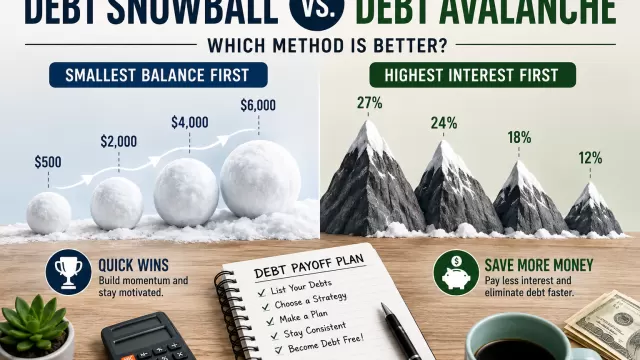
Debt Avalanche Method
With the debt avalanche method, you prioritize the debt carrying the highest interest rate.
Using our earlier example:
| Card | Balance | APR |
|---|---|---|
| Card A | $1,500 | 29% |
| Card B | $3,000 | 24% |
| Card C | $5,000 | 19% |
You would:
- Pay the minimum on all three cards.
- Put your extra money toward Card A at 29%.
- Once Card A reaches $0, redirect that payment toward Card B.
- Then attack Card C.
Advantage
You’re attacking the most expensive debt first.
This generally reduces interest costs compared with prioritizing lower-rate debt.
Disadvantage
Your highest-interest card may have a large balance.
It could therefore take longer to experience the psychological reward of eliminating an entire account.
Debt Snowball Method
The debt snowball method works differently.
Instead of prioritizing interest rates, you attack the smallest balance first.
Suppose you owe:
Card A: $500
Card B: $2,000
Card C: $7,000
You attack the $500 balance first.
Once it’s eliminated, you take the payment you were making on Card A and add it to Card B.
After Card B reaches zero, that entire payment goes toward Card C.
Your payments effectively grow as balances disappear.
Advantage
You can experience quick wins.
Eliminating an entire balance can provide motivation to continue.
Disadvantage
You could pay more interest overall compared with prioritizing your highest-interest debt.
Debt Avalanche vs. Debt Snowball: Which Is Better?
Mathematically, prioritizing the highest interest rate generally has an advantage because you’re eliminating the most expensive debt first.
But personal finance isn’t only mathematics.
A strategy only works if you follow it.
Choose:
Debt avalanche if minimizing interest is your priority.
Choose:
Debt snowball if seeing accounts disappear quickly helps you stay motivated.
The Consumer Financial Protection Bureau recognizes both approaches as debt-reduction strategies.
See the CFPB’s guide to reducing debt
Step 6: Find an Extra $100–$500 for Your Debt
Once you’ve chosen your strategy, look for additional money.
Review:
- Restaurant spending
- Food delivery
- Subscriptions
- Entertainment
- Shopping
- Insurance
- Phone plan
- Internet
- Transportation
- Recurring fees
Suppose you reduce:
Restaurants: $100
Subscriptions: $40
Shopping: $100
Phone/internet: $30
Miscellaneous spending: $80
Total:
$350 per month
Instead of allowing that money to disappear into other purchases, direct the $350 toward your target credit card.
Over one year:
$350 × 12 = $4,200
of additional payments.
For more places to look for savings, see BriefTop’s How to Save Money Fast: 15 Practical Ways That Actually Work.
Step 7: Use Extra Income Strategically
Expense cutting isn’t the only way to accelerate debt repayment.
Additional income can be extremely powerful because you can direct much of it toward your balance without reducing your normal budget.
Potential sources include:
- Overtime
- Freelance work
- Part-time work
- Bonuses
- Selling unused belongings
- Seasonal work
- Tax refunds
- Cash gifts
Suppose you normally pay:
$400 per month
toward your credit-card debt.
Then you earn an additional:
$300
and put it entirely toward your target card.
That month you’ve paid:
$700
instead of $400.
Repeated occasionally, those extra payments can substantially accelerate your progress.
Step 8: Consider Keeping a Small Emergency Cushion
There’s an important tension between saving and paying debt.
Sending every dollar you have toward credit cards might reduce the balance faster.
But if your car breaks down next week and you have $0 available, you may need to put the repair straight back on the card.
That’s why maintaining some emergency savings can be useful.
You might begin with:
$500
or:
$1,000
and continue building your emergency fund as your financial situation improves.
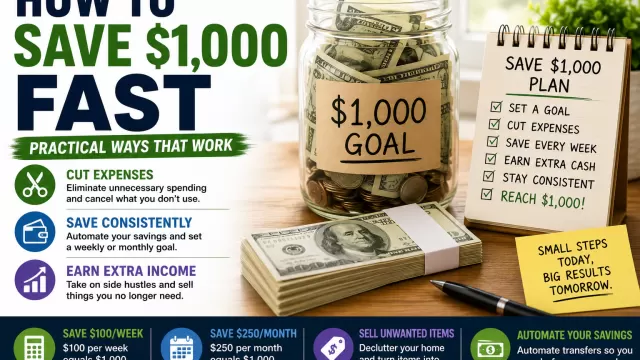
If you currently have no savings, BriefTop’s How to Save $1,000 Fast: A Realistic Step-by-Step Plan can help you establish that first milestone.
For a longer-term target, see Emergency Fund: How Much Should You Have?.
Step 9: What If You Can’t Afford the Minimum Payments?
Don’t simply ignore the bill.
If you’re struggling to make your required credit-card payments, contact your card issuer as soon as possible.
Explain:
- Why you’re having difficulty
- How much you can currently afford
- When you expect your situation to improve
- What type of payment arrangement you need
Some issuers may have hardship or payment options available.
The Consumer Financial Protection Bureau specifically recommends contacting the credit-card company immediately when you cannot make your payments.
Read the CFPB’s guidance for consumers who can’t pay their credit-card bills
If the underlying problem is that nearly every paycheck is already consumed by bills, BriefTop’s How to Stop Living Paycheck to Paycheck: 10 Steps to Break the Cycle can help you work on the cash-flow problem alongside your debt.
Step 10: Be Careful With Debt Consolidation
Debt consolidation can sound attractive.
Instead of managing several balances, you combine debts into one payment.
Possible options can include:
- Balance-transfer credit cards
- Personal consolidation loans
- Nonprofit credit counseling and debt-management plans
But consolidation doesn’t automatically eliminate debt.
Suppose you move:
$10,000
from several credit cards into a new loan.
You still owe:
$10,000
The debt has simply changed form.
Consolidation may make sense when the total cost is lower and the repayment structure helps you eliminate debt.
But carefully evaluate:
- Interest rate
- Promotional period
- Balance-transfer fees
- Loan origination fees
- Monthly payment
- Repayment period
- Total amount repaid
A lower monthly payment doesn’t automatically mean a cheaper loan.
The repayment period could simply be longer.
The CFPB also warns that promotional balance-transfer rates generally last for a limited period and that balance-transfer fees may apply.
Read the CFPB’s current guidance on consolidating credit-card debt
Watch Out for Debt Relief Promises
Be cautious when a company promises to:
- Make your debt disappear
- Guarantee a specific settlement
- Tell you to stop paying creditors
- Tell you to stop communicating with your card issuer
- Demand questionable fees before providing results
Debt problems can make quick solutions extremely attractive.
That also makes indebted consumers potential targets for misleading offers.
Before agreeing to any debt-relief service, understand exactly what the company is offering, what it costs and what could happen to your accounts.
Should You Use a Balance Transfer Card?
A balance-transfer card can sometimes reduce interest temporarily.
For example:
Existing balance:
$5,000
Current APR:
25%
New balance-transfer offer:
0% introductory APR for a limited period
Moving the balance could provide a window for aggressively paying down principal rather than accumulating the same level of interest.
But several things matter.
Balance-Transfer Fee
The new card may charge a percentage of the amount transferred.
Promotional Deadline
The introductory APR doesn’t last forever.
New Purchases
Using the new card for additional spending can complicate your payoff strategy.
Qualification
Not everyone qualifies for the best promotional offers.
Before transferring anything, calculate whether the fees and repayment timeline actually improve your situation.
How Credit Card Interest Makes Debt Harder to Pay
Credit-card interest can accumulate while you carry a balance.
The exact calculation depends on your card agreement.
Many issuers calculate interest using daily balances.
That means carrying a balance longer can generally result in more interest accumulating.
For this reason, additional payments can have two benefits:
They reduce what you owe.
And they can reduce the balance on which future interest is calculated.
Should You Pay Credit Cards More Than Once a Month?
You don’t necessarily need to wait until the due date to make an additional payment.
Suppose your monthly debt budget is:
$600
Instead of one $600 payment, you might make:
$300 after your first paycheck
and:
$300 after your second paycheck
This can also make the payment easier to fit into a paycheck-based budget.
Just make sure you’re satisfying the issuer’s required minimum payment by the due date.
Example: Paying Off $5,000 in Credit Card Debt
Suppose you have:
Credit-card balance: $5,000
And you decide you can dedicate:
$500 per month
toward the balance.
Ignoring interest for this simplified illustration:
$5,000 ÷ $500 = 10 months
Now suppose you find another:
$100 per month
Your payment becomes:
$600
Ignoring interest:
$5,000 ÷ $600 = approximately 8.3 months
Actual payoff timing will differ because interest, new charges, fees and payment timing affect the balance.
But the example demonstrates an important point:
Increasing your monthly payment can significantly reduce your payoff timeline.
Example: Paying Off Multiple Credit Cards
Suppose you owe:
Card A: $1,000 at 29%
Card B: $2,500 at 25%
Card C: $4,500 at 18%
Total:
$8,000
Using the avalanche strategy:
First Target
Card A — 29%
Pay minimums on Cards B and C.
Put every available extra dollar toward Card A.
Second Target
After Card A reaches $0, redirect its entire payment toward:
Card B — 25%
Final Target
After Card B reaches $0, redirect the combined payment toward:
Card C — 18%
Eventually, all of the money that had been spread across three cards becomes one large payment attacking the final balance.
What Should You Do After Paying Off a Credit Card?
Reaching a $0 balance is a major milestone.
But don’t immediately redirect the newly available money toward lifestyle spending.
Suppose your old credit-card payment was:
$400 per month
After the card is paid off, you could redirect that $400 toward:
- Another debt
- Emergency savings
- Retirement
- A major financial goal
- A combination of several goals
If you’re unsure how much to continue saving, BriefTop’s How Much Should I Save Each Month? A Simple Guide for Every Income can help you establish your next target.
How the 50/30/20 Rule Can Fit Into Debt Repayment
One common budgeting framework allocates approximately:
50% → Needs
30% → Wants
20% → Savings and financial goals
Debt repayment beyond required minimums can be incorporated into your financial-goals category.
But don’t force yourself into percentages that don’t match your circumstances.
If housing or other necessities consume more than 50% of your income, adjust accordingly.
See BriefTop’s 50/30/20 Budget Rule: How It Works With Real Examples for a detailed explanation.
Common Credit Card Debt Payoff Mistakes
Paying Only the Minimum Forever
Minimum payments keep the account current, but paying more when possible can reduce your balance faster and lower interest costs.
Continuing to Add New Purchases
It’s difficult to empty a bucket while continuing to fill it.
Attacking Every Card Equally
A focused avalanche or snowball strategy gives your extra money a clear target.
Having No Emergency Savings
An unexpected expense can send you straight back to the credit card.
Consolidating Without Changing Spending
Moving debt doesn’t solve the behavior or income problem that created an ongoing deficit.
Ignoring Your Statements
Review your statements regularly for balances, interest charges, fees, payment deadlines and transactions you don’t recognize.
Frequently Asked Questions
What is the fastest way to pay off credit card debt?
The fastest realistic approach is generally to stop adding new balances, make all required payments, maximize the amount available for repayment and focus extra money on a specific card. Prioritizing the highest-interest debt can reduce interest costs.
Is the debt snowball or avalanche better?
The avalanche method prioritizes the highest interest rate and can save money on interest. The snowball method prioritizes the smallest balance and may provide faster psychological wins. Choose the approach you’re most likely to maintain.
Should I save money or pay off credit card debt?
The answer depends on your financial situation. High-interest debt can be expensive, but having no emergency savings may force you to borrow again when an unexpected expense occurs. Some people choose to maintain a starter cash cushion while aggressively paying down debt.
Is $10,000 in credit card debt a lot?
Whether $10,000 is manageable depends on your income, expenses, interest rates and other obligations. Rather than focusing only on the balance, calculate how much you can consistently pay each month and create a realistic payoff plan.
Can I negotiate with my credit card company?
If you’re struggling to pay, contact your card issuer directly. Depending on your circumstances and the issuer’s policies, options may be available regarding payments, fees, rates or due dates.
Does paying off credit card debt help your credit score?
Paying balances down can reduce credit utilization, which is one factor used in credit scoring. Credit scores depend on multiple factors, however, so no specific score increase can be guaranteed.
The Bottom Line
Learning how to pay off credit card debt starts with replacing uncertainty with a plan.
Know exactly what you owe.
Stop adding unnecessary new balances.
Create a realistic budget.
Make your required payments on time.
Choose either the avalanche or snowball strategy.
Find additional money for your target balance.
Maintain some financial protection against emergencies.
And continue until the balance reaches:
$0
The first few months may feel slow.
But every dollar of principal you eliminate is a dollar you no longer owe.
Once the first card reaches zero, redirect that payment toward the next one.
That’s when the process can begin accelerating.
The goal isn’t simply to pay off a credit card.
It’s to reach a point where your income can build your future instead of continually paying for your past.
Editorial Note: This article provides general educational information and does not constitute individualized financial, investment, credit, tax or legal advice.
Trusted Sources
Consumer Financial Protection Bureau — How to Reduce Your Debt
Consumer Financial Protection Bureau — What Should I Do If I Can’t Pay My Credit Card Bills?
Consumer Financial Protection Bureau — Credit Card Debt Consolidation
Related BriefTop Guides
How to Stop Living Paycheck to Paycheck
Emergency Fund: How Much Should You Have?